














Dirt Clicker
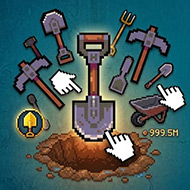















It starts with a single spoon and a patch of dirt. There’s no elaborate tutorial, no lengthy cutscene explaining lore — just you, the ground beneath your feet, and the quiet, oddly satisfying act of digging. That’s Dirt Clicker in its purest form, and it’s exactly why a game about collecting dirt has managed to pull in tens of thousands of wishlists on Steam before it’s even fully released. If you’re new here, or you’ve just started your first dig and want the bigger picture, this page walks through what the game actually is, how it plays, and what to expect as you go deeper.
| Detail | Info |
|---|---|
| Developer / Publisher | Sailing Bears |
| Genre | Casual, Indie, Simulation, Strategy — Idle/Incremental clicker |
| Platform | Windows (via Steam) |
| Engine | Godot |
| Current Status | Free demo available now |
| Full Release | November 4, 2026 |
What Kind of Game Is Dirt Clicker?
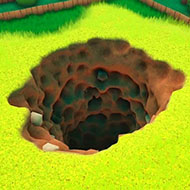
At its core, Dirt Clicker belongs to the incremental genre — the same broad family as clicker and idle games, where small actions snowball into bigger systems over time. What sets it apart from most games in that space is its framing: instead of clicking to smash rocks, farm currency, or fight monsters, you’re digging. Layer by layer, dig by dig, you work your way toward whatever’s waiting at the bottom of the world, and the game leans fully into that theme rather than treating it as a reskin of a more generic clicker template.
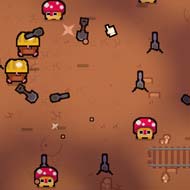
The visual style matches that low-key premise. Dirt Clicker uses minimalist, top-down pixel art rather than flashy 3D visuals, which keeps the game lightweight and easy to run while giving it a cozy, relaxing tone that a lot of players specifically call out as the game’s biggest draw. It’s less about intensity and more about the slow, steady pleasure of watching your operation grow from a single person with a spoon into a coordinated digging economy.
The Basic Loop: From Spoon to Empire
Every run begins the same way — nothing but a spoon and a small patch of ground. Early on, progress comes from direct digging: click, dig, collect. That’s deliberately simple, and it’s meant to be, because the real game reveals itself once you start reinvesting what you find. Dirt and treasures pulled from the ground can be spent on better tools, and better tools mean faster digging, which means more dirt, which means more tools. It’s the classic incremental feedback loop, just filtered through a very specific theme.
Manual digging only carries you so far, though. Before long, a single spoon stops being able to keep pace with what the game expects of you, and that’s the point where hiring workers becomes the obvious next step. We cover the different worker types — what each one does and when to hire them — in more depth on their own page, but the short version is that automating your digging is less optional than it might first appear. Trying to stick with manual clicking well past that point tends to slow a run down far more than it should.
- Click Dig manually with your current tool to collect dirt and occasionally uncover items directly.
- Hire Spend earned resources to bring on workers who dig automatically in the background.
- Upgrade Improve tools and worker output through the shop and the skill tree.
- Explore Decide whether to fully clear a layer for its hidden extras or push toward the next one.
Where Dirt Clicker Fits Among Incremental Games
The incremental genre is a crowded one. Most entries share the same underlying skeleton — a currency that ticks up, upgrades that make it tick up faster, and some form of prestige or reset loop once things plateau. What tends to separate the memorable ones from the forgettable ones isn’t the math underneath; it’s whether the theme wrapped around that math actually gives the numbers meaning. Dirt Clicker’s answer to that is digging — a premise simple enough to explain in one sentence, but flexible enough to support layers, workers, relics, and a full skill tree without ever feeling bolted on.
Community reaction so far has leaned heavily on that same point. Viewers and players discovering the game through early gameplay videos and demo write-ups repeatedly describe being surprised by how much depth is hiding behind such a plain-sounding concept — a reaction that tracks with how the genre usually earns long-term players. Nobody wishlists a clicker game because of its premise alone; they stick around because the systems underneath reward the time they put in, and that’s the bet Dirt Clicker is making with its layers, its crew system, and its skill tree working together rather than in isolation.
Layers: Digging Somewhere New Every Time
Dirt Clicker doesn’t keep you digging through the same patch of brown dirt indefinitely. As you progress, you move through distinct layers, and each one carries its own visual identity and its own difficulty curve — what worked comfortably on the surface can start to feel underpowered once the terrain itself changes color and everything about it gets harder to dig through. That shift isn’t just cosmetic dressing; it’s the game’s way of signaling that your current setup needs to grow to keep up.
Part of what makes layer progression interesting is the choice baked into it. At every layer, you’re weighing whether to dig up everything that layer has to offer — including items tucked into specific corners that a quick pass would miss — against simply pushing on to whatever’s next. There’s no universally correct answer here, and different playstyles lead to noticeably different runs. If you want a closer look at how that tension plays out and what’s actually waiting once the surface layer gives way to something stranger, the layer-by-layer breakdown goes into much more detail.
Building a Crew: Automation Done Right
Once you start hiring, Dirt Clicker opens up into something closer to a small management sim layered on top of the digging. Different worker types exist for different jobs — some are cheap, disposable early hires meant to get you off manual clicking as fast as possible; others are sturdier and built to hold up once the terrain gets tougher; and a few work indirectly, boosting what your other workers already produce rather than digging themselves. Sequencing matters more than most new players expect. Hiring the wrong type at the wrong time, or hiring one type indefinitely instead of diversifying, is one of the most common ways a run stalls out.
The game also lets you name individual workers and track their performance once your crew grows past a handful of hires, which stops being a nice-to-have and starts being genuinely useful the moment you’re running enough workers that treating them as one undifferentiated blob no longer makes sense. For a full rundown of who’s available to hire, what each one is actually good at, and the mistakes players commonly make with them, the worker guide covers it in detail.
Skill Tree and Spells: Where the Real Power Comes From
Underneath the digging and hiring sits a skill tree that quietly shapes almost everything else — your raw digging power, your odds of pulling better loot, how efficient your tools are, and even how much certain workers contribute. It’s not a side system you can safely ignore while focusing purely on hiring; players who lean entirely on workers without investing in the tree tend to plateau noticeably earlier than those who balance both.
Layered on top of the tree are spells — and the game itself doesn’t undersell them. They’re described as powerful enough to break the intended pacing of a run, which in practice means they reward patience more than immediate use. A spell picked up before you’ve built any real foundation of workers and tools tends to underwhelm, simply because there’s not much for it to amplify yet. The full breakdown of the skill tree and spell system gets into how to sequence these decisions so they actually pay off instead of fizzling out.
What’s Actually Buried Down There
Digging in Dirt Clicker isn’t just about accumulating a number that goes up. Scattered through every layer are chests, relics, and rare puzzle pieces — over 40 distinct valuable items in total — and each behaves differently from ordinary loot. Chests, in particular, are notoriously easy to get stuck on: most need a matching key to open, and the game doesn’t spell out how that pairing works, which is exactly why it’s one of the most discussed topics in the game’s own community. There’s also a rarer variant, the Evil Chest, that doesn’t even appear until its own key has spawned first.
Relics work differently still — rather than being sold or displayed, they grant small, permanent stat bonuses that build up the longer you’re playing, making them a long-term investment rather than an instant payoff. Between the two systems, there’s a genuine incentive to dig thoroughly rather than just quickly. If you’ve found yourself stuck on a chest you can’t open or a relic-based puzzle that isn’t clicking, the dedicated pages on opening chests and hidden relics walk through exactly how these systems work and where most players get tripped up.
Achievements, Stats, and Replayability
Dirt Clicker supports Steam Achievements, Steam Cloud saves, Stats, and Leaderboards, which together push the game toward being something you return to rather than something you finish once and set aside. Certain achievements are tied to specific playstyles — digging a set amount using nothing but a spoon, for instance, rather than relying on workers — which encourages experimenting with runs that don’t just follow the fastest path to the bottom.
Badges and relics collected along the way also give completionist-minded players something to chase beyond raw progression speed. Whether you’re aiming to finish a layer as efficiently as possible or trying to squeeze every last item and puzzle piece out of it before moving on, the systems in place support both approaches without forcing you into one or the other.
The Story Behind the Dig
Dirt Clicker comes from Sailing Bears, and based on how the studio communicates with its own players, this is a small, hands-on team rather than a large publisher-backed operation. Their posts to the community read less like polished marketing copy and more like direct updates from the people actually writing the code — bug fixes explained in plain language, feedback acknowledged individually, and a tone throughout that treats the audience as collaborators rather than customers to be managed.
That approach seems to be paying off. More than 38,000 players had wishlisted Dirt Clicker before its full release, and the demo has already drawn crowds large enough that over 3,300 people have been digging simultaneously during its more active stretches — a genuinely unusual outcome for a small, self-published game built around such an unassuming premise. Rather than treating that momentum as a marketing statistic, the developers have leaned into it, opening a Discord server where players can follow development, report bugs directly, and eventually get first access to beta testing and localization work ahead of the full launch.
Localization itself has already expanded significantly during the demo period, with support added for several additional languages so more players around the world can dig in their own language rather than relying on English alone. The team has been transparent that the first pass leaned on machine translation as a starting point, with plans to refine the wording as the community around each language grows — another small example of the studio treating the demo period as a genuine work-in-progress rather than a finished product waiting on a release date.
Getting Started the Smart Way
If you’re brand new, resist the urge to treat the opening stretch as something to rush through. The manual-digging phase with just a spoon is short by design, and it exists to teach the basic loop before workers, tools, and the skill tree all start layering on top of each other. Pay attention early to what you’re digging past — chests and puzzle-piece locations in particular are easy to miss on a fast first pass and can mean backtracking through terrain you’ve already cleared.
From there, the general arc most successful runs follow looks something like: get off manual digging as soon as cheap workers are available, start feeding resources into the skill tree rather than hiring exclusively, diversify your crew once a single worker type stops scaling, and save your strongest spells for once that foundation is actually in place rather than using them the moment they unlock.
| Common Early Mistake | Better Approach |
|---|---|
| Sticking with manual digging too long | Hire your first workers as soon as they’re affordable — a small crew already outproduces solo clicking |
| Spending everything on more workers, ignoring the skill tree | Split resources between hiring and tree points so neither system falls behind the other |
| Digging past a chest without its key | Note the location and come back once you’ve found the matching key rather than assuming it’ll be easy to relocate |
| Using a spell the moment it unlocks | Wait until workers and tools give it something substantial to amplify |
| Rushing every layer as fast as possible | Slow down occasionally for relics and puzzle pieces — their value compounds the earlier you pick them up |
FAQ
Is Dirt Clicker free to play?
The demo is free to play right now on Steam. The full version is scheduled to release on November 4, 2026, and pricing for the full release hasn’t been detailed on this page — check the official Steam store listing for the most current pricing information.
Do I need to be online to play?
Dirt Clicker is a single-player game with local save support, plus optional Steam Cloud syncing if you want your progress to follow you across devices.
How long does a full playthrough take?
That depends heavily on how thoroughly you explore each layer versus how quickly you push toward the next one — the game is built around that trade-off, so there isn’t a single fixed playtime that applies to every run.
What platforms does Dirt Clicker support?
Windows is the only officially confirmed platform right now. Steam Deck isn’t formally verified, though the demo is playable on it with at least one known interface issue. For the full technical rundown, see platform support.
Is there a roadmap for what’s coming after the demo?
The developers have focused post-demo updates on bug fixes, clarity improvements, and localization rather than revealing major new content ahead of time. The release roadmap page covers what’s confirmed so far and what to expect before launch.
I’m stuck on a chest or puzzle — where do I get help?
You’re not alone — it’s one of the most common questions in the game’s community. Start with the chests and keys guide or the relics and puzzle pieces guide depending on what’s giving you trouble.
What languages is Dirt Clicker available in?
Beyond English, the developers have added support for several additional languages during the demo period, including Brazilian Portuguese and Chinese, with more refinement planned as localization continues.
Can I report bugs or suggest changes to the developers?
Yes — the game includes an in-game bug report button, and the developers are active in both the Steam Community discussions and their official Discord server, where they’ve responded directly to player questions and feedback throughout the demo period.
Why Dirt Clicker Has Struck a Chord
Part of what makes Dirt Clicker stand out in an already crowded incremental genre is how unpretentious it is about its own premise. It’s not trying to dress up its mechanics with an elaborate story or a grand fantasy setting — it’s a game about digging, made by a small, hands-on developer that talks to its own community directly rather than through a distant PR pipeline. That kind of transparency, combined with a genuinely relaxing core loop, seems to be exactly what’s resonated with the tens of thousands of players who’ve already added it to their wishlist ahead of release.
Whether you’re here for a quick, low-stakes session of clicking and hiring, or you’re the type who wants to fully map out every relic, chest, and puzzle piece a layer has to offer, Dirt Clicker is built to accommodate both. Start with your spoon, dig deep, and see how far down the dirt actually goes.
What tends to keep players coming back after that first session isn’t any single standout feature — it’s how naturally the systems layer on top of each other. A run that starts as a few idle clicks on the surface can, a handful of layers later, turn into genuine decision-making about worker composition, skill tree allocation, and whether a spell is worth saving for later. That gradual shift from simple to genuinely strategic, without ever feeling like the game is front-loading complexity you’re not ready for, is a large part of why the demo has held onto players well past their first sitting.
If this is your first time hearing about the game, the best next step is simply trying the demo yourself — reading about digging only goes so far compared to actually watching your first Mushroom Buddy take over a job you were doing by hand. And if you’re already a few layers in and looking for something more specific, the guides linked throughout this page are built to answer exactly the kinds of questions that tend to come up once the early game gives way to something with more moving parts.
Comments
There are no reviews yet. Be the first one to write one.